Best Herding Ball for Dutch Shepherds: Sizing | CollieBall

Updated: Aug 1
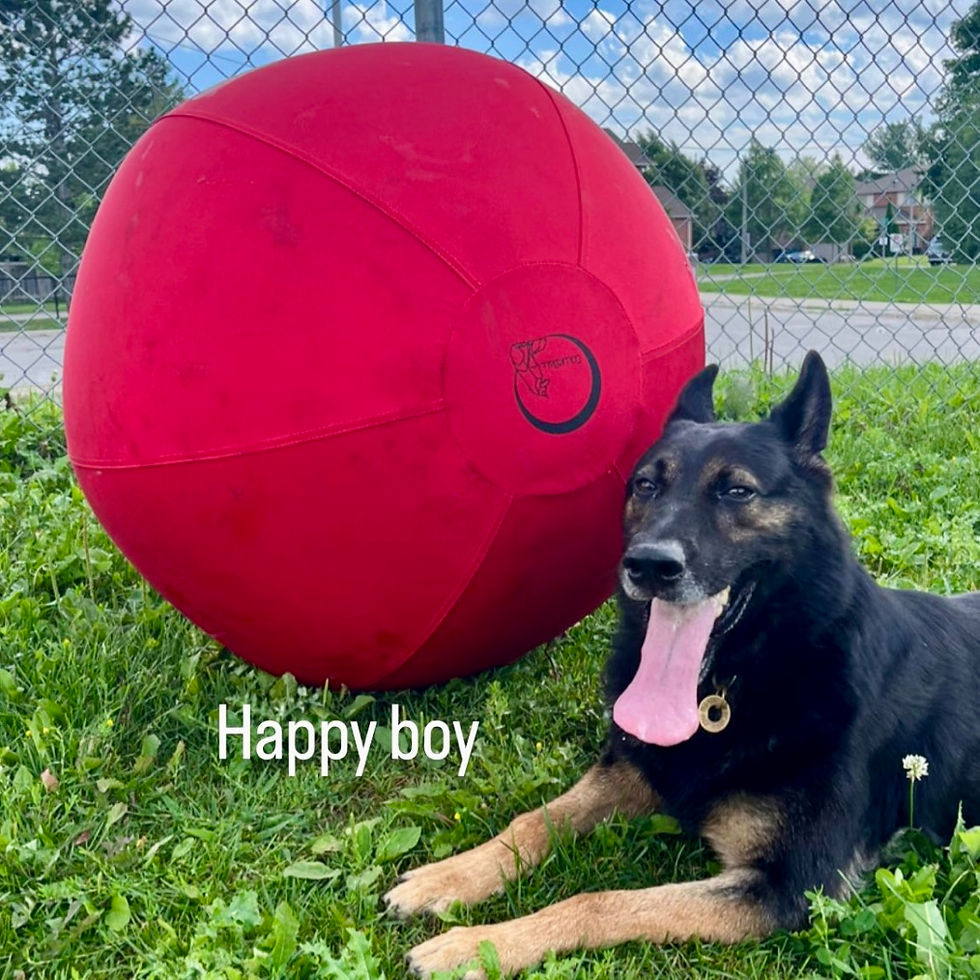
Updated July 2026
The best herding ball for a Dutch Shepherd is the 37-inch CollieBall ($104.50) for working-line males over 65 lb, or the 30-inch ($81.00) for females and smaller show-bench dogs — sized so a KNPV-line push instinct has a target it can't grip.
A Dutch Shepherd doesn't want a ball it can carry. It wants one it has to push. Hollandse Herders were bred to move stock across polders, hold a line against a bolting sheep, then drop into pursuit — and the working lines that ended up in KNPV and modern police work still carry that engine. A herding ball for a Dutch Shepherd puts that engine to work in a legal target instead of your fence line. Meet the original fabric herding ball
Why Most Dog Toys Fail Dutch Shepherds
A tennis ball ends the second a Dutchie's jaw closes on it. Kong toys get gnawed for ten minutes and abandoned. The rubber ball at the pet store meets a working-line brindle in an afternoon and comes back with the seams open. None of those toys was designed for a dog whose ancestors held livestock in place with a stare and a shoulder.
The bigger problem is capacity. A KNPV-line Dutch Shepherd can work for two hours without slowing down. A regular walk barely opens the throttle. The nervous energy that has nowhere to go turns into fence-running, counter-checking, and the kind of shoulder-charging every Dutchie owner has cleaned up after.
A herding ball fixes both problems at once. It is too big to bite, so the game never ends by accident, and the push-and-chase rhythm asks the dog to think while it moves — the same combination that makes obedience work on a KNPV field feel easy afterward.
What a Dutch Shepherd Actually Needs in a Herding Ball

Three things matter for a Dutch Shepherd, and size is the first. The ball has to be too big for the dog to grip in its mouth from a running push. For a 65 to 85 pound working-line male, that's 37 inches. For a 45 to 65 pound female or a smaller show-bench Dutchie, the 30-inch is the right lane — anything smaller and the dog will find a way to carry it, and the game collapses back into a fetch.
The second is jaw pressure survival. Dutchies were selected in the KNPV programs for bite work, and their tolerance for gnawing on a target while excited is high. A ballistic-fabric cover with a needle-valve replaceable bladder outlasts a Dutch Shepherd's enthusiasm in a way that vinyl exercise balls never do.
The third is a real unpredictable roll. A good herding ball moves off-center when the dog pushes it, so the dog has to read, cut, and correct. That is the mental component. Fifteen minutes of that is worth an hour of straight-line fetch for a working-line brain.
The Right Herding Ball for Dutch Shepherds
The CollieBall was built for working dogs. Inside is a thick, needle-valve bladder that gives the ball structure and a low, bouncy roll on grass, gravel, and turf. Around the bladder is a military-grade ballistic fabric cover with a double-zipper closure — the same construction that survives Belgian Malinois and working-line German Shepherds, so a Dutch Shepherd sits well inside the design envelope. See the full CollieBall lineup
For a standard KNPV or working-line Dutch Shepherd male at 65 to 85 pounds, the size that fits is the 37-inch. It sits chest-high on the dog, forcing a full-body push instead of a mouth grip. For a female at 45 to 65 pounds, or a smaller show-bench Dutchie, the 30-inch is the right call. Both use the same fabric-and-bladder construction we go deep on in the Belgian Malinois sizing guide
Short-Haired, Long-Haired & Rough-Haired Dutch Shepherds
The FCI and the Dutch Shepherd Club of America recognize three coat varieties, and they aren't purely cosmetic. The short-haired Dutchie is by a wide margin the most common — the KNPV police lines, the modern working-line breedings, and most US show-bench dogs are short-hairs. They sit at 55 to 85 pounds depending on line, and the 37-inch is the standard fit for a mature working-line male. See the full AKC Dutch Shepherd breed standard
The long-haired Dutch Shepherd is rarer and, at the same weight, plays exactly the same. The coat is the only real difference. Same sizing logic applies: 37-inch for working-line males, 30-inch for females and lighter-framed dogs.
The rough-haired Dutchie is the rarest variety on the planet, historically leaner in the shoulder than the short-haired working lines and often closer to a Border Collie build in weight. A rough-haired at the lighter end of the range (45 to 55 pounds) does fine on the 30-inch. Above that, size up.
Get the Right CollieBall for Your Dutch Shepherd
37" CollieBall — the Dutchie working-line standard
$104.50 (was $110)
The right size for a 65 to 85 pound Dutch Shepherd working line: chest-high push target, ballistic cover, replaceable bladder.
→ Shop the 37" CollieBall for your Dutch Shepherd
For a smaller female or show-bench Dutchie:
30" CollieBall — for females and lighter-framed Dutchies
$81.00 (was $90)
A step down for Dutchies in the 45 to 65 pound range or dogs that flip a 37-inch around too easily.
→ Size down to the 30-inch
Dutch Shepherd Size Guide: Matching the Ball to the Dog

Forget generic dog-size charts. A Dutch Shepherd's sizing comes down to one test: can the dog get its mouth around the ball? If yes, the ball is too small and the game becomes a fetch. If no, the drive stays on push-and-chase where it belongs.
A standard working-line Dutchie male at 65 to 85 pounds belongs on the 37-inch. That is the majority of what US KNPV lines look like at maturity, and it is the exact size Belgian Malinois handlers use across the same weight class.
A female or a lighter-framed short-haired dog at 45 to 65 pounds takes the 30-inch. Puppies still size up to their adult ball rather than a smaller ball they will grow out of in six months — you do not size down to the 22-inch for a Dutch Shepherd puppy, because the working-line jaw grows up.
When in doubt, go bigger, not smaller. Use the finder above, or see the complete size guide for every dog
5 Things a Real Herding Ball Gives Your Dutch Shepherd
1. A job that matches the KNPV-line drive.
Dutch Shepherds were selected in the KNPV programs for full-body engagement: bite work, tracking, obedience under pressure. A ball they cannot pick up gives that same push-and-drive instinct a legal target in the yard. It is the closest thing to actual working-dog work you can set up before breakfast.
2. Real physical work, not a sprint and a stop.
Instead of one throw and a carry-back, the ball keeps rolling. Your Dutchie runs, cuts, corrects, and pushes for the full session. Fifteen minutes of that outputs more than an hour of straight-line fetch, and does it without the joint pounding of repetitive full-speed sprints.
3. Mental focus that drains the nervous engine.
Reading an unpredictable roll is a thinking task. A Dutch Shepherd that has to track the ball, choose an angle, and cut hard is running the same processor a KNPV field or a police tracking exercise runs. That is exactly the workout a working-line brain is asking for.
4. An outlet for the push-and-chase instinct.
The shoulder-charging and forward-drive Dutchies aim at fence lines, doors, and occasionally family members finally has an intended target. The ball invites the exact move the dog was already going to do and channels it somewhere useful.
5. A toy that survives a Dutch Shepherd.
Ballistic fabric and a replaceable bladder mean the ball outlasts the dog's enthusiasm, rather than the other way around. A short-haired working-line Dutchie with 70 pounds of push behind it is essentially the design brief the CollieBall was written for.
How to Introduce Your Dutch Shepherd to a Herding Ball

Start in a contained space — a fenced yard, not the local park. A new ball plus too much space plus a Dutchie's problem-solving means the first ten minutes will be about the dog testing what the ball is, and you want to be able to end the session quickly if the drive stacks too high.
Roll it slowly yourself first. Let your Dutch Shepherd watch it move, then invite a nudge with a low, calm cue. The moment the dog makes contact with the nose or chest, mark and praise. Some Dutchies commit within thirty seconds; some circle and stare for a day, then commit hard the second time out. Both are normal.
Cap the first few sessions at fifteen minutes with water breaks, and keep the ball fully inflated until no wrinkles are left on the cover. An underinflated ball rolls dead and the game collapses. A fully inflated ball keeps the roll unpredictable, which is where the mental work lives.
Find Your Dog's CollieBall
Still deciding between sizes? Use the interactive sizer above, or size up — a slightly big ball forces a full-body push, which is exactly what a Dutch Shepherd engine needs.
What Other Owners Say
Common Questions From Dutch Shepherd Owners
What size herding ball does a Dutch Shepherd need?
Most working-line Dutch Shepherd males run 65 to 85 pounds, which puts them squarely on the 37-inch CollieBall. Females and smaller show-bench Dutchies at 45 to 65 pounds fit the 30-inch. When in doubt between two sizes, go up — a slightly big ball forces a full-body push, which is exactly what a Dutchie's engine needs.
Are herding balls safe for Dutch Shepherds?
Yes, when the ball is sized correctly and play is supervised. The whole point of a herding ball is that it is too large for the dog to fit in its mouth, so the standard fetch-and-carry choking risk is off the table. A ballistic-fabric cover also removes the plastic-shard risk of hard exercise balls that crack under a KNPV-line jaw.
Will a Dutch Shepherd destroy a herding ball?
A working-line Dutchie is one of the harder testers a toy will meet, so the whole reason the CollieBall exists is to survive it. The ballistic fabric shell is the same weight class used in body armor, the bladder is replaceable if the dog eventually finds the zipper, and the double-zip closure keeps the puller tucked away. That is a very different lifetime from a fifteen-dollar vinyl exercise ball.
Is a herding ball good for KNPV-line Dutch Shepherds?
It is one of the cleanest energy outlets you can give a KNPV-line dog outside of actual bite work and tracking. The push-and-chase asks for full-body engagement, the unpredictable roll asks for reading and cutting, and the fifteen-minute session length matches the intensity a working-line Dutchie already brings to the field. It is not a training substitute, but it is a mental and physical release valve.
What's the difference between a short-haired, long-haired, and rough-haired Dutch Shepherd for sizing?
For herding ball sizing, coat variety does not change the answer — weight and drive do. Most short-haired Dutchies from working lines sit at 55 to 85 pounds and take the 37-inch. Long-haired Dutchies in the same weight range use the same 37-inch. Rough-haired dogs are historically leaner and often fit better on the 30-inch, but check the dog's actual weight and drive first.
How is a herding ball different from a regular ball for a Dutch Shepherd?
A regular ball is built to be caught and carried, which ends the game the moment a Dutch Shepherd's jaw closes on it. A herding ball is built to be pushed. The dog cannot mouth it, so the drive to move it forward stays engaged for a full session instead of collapsing into a repetitive fetch. That is the difference between draining a working-line brain and just running the legs.
The Bottom Line for Dutch Shepherd Owners
A working-line Dutch Shepherd will out-run, out-work, and out-think almost any toy in your house. The question is not whether a herding ball will hold up. It is which size matches your dog. For most Dutchies at 65 to 85 pounds, that is the 37-inch. For females and smaller show-bench dogs at 45 to 65 pounds, it is the 30-inch.
Match the size to the dog, keep it fully inflated, and you have finally handed a KNPV-line engine a job that fits it. That is the difference between a Dutchie who comes inside satisfied and a Dutchie who comes inside still looking for something to run into.
Interested in giving your Dutch Shepherd a formal ball-push sport? See the American Treibball Association
→ Shop the 37" CollieBall for your Dutch Shepherd
→ Compare every size in the full CollieBall lineup
Browse all sizes and find the right fit at the CollieBall shop — great for Dutch Shepherds of every size.


Comments