How to Calm a Hyper Dog (And Keep Them Happy Every Day)
- huckleberry

- Apr 30
- 4 min read
Updated: Jul 21
How to calm a hyper dog is one of the most searched questions among dog owners — and if you've ever watched your herding dog ricochet off the walls at 9pm, you already know the feeling. The good news: hyperactivity in dogs is almost always manageable. Better yet, the solution usually isn't medication or a trainer — it's understanding what your dog actually needs.
Why Some Dogs Are "Hyper" in the First Place
Before you can calm a hyper dog, you need to understand why they're acting that way. Most hyperactive behavior isn't a personality flaw — it's a symptom of unmet needs.
Herding dog breeds like Border Collies, Australian Shepherds, and Cattle Dogs were bred for 8–12 hours of intense physical and mental work every day. A bored herding dog isn't just annoying — they're a dog doing exactly what their genetics demand: seeking stimulation at any cost.
Even non-herding breeds can exhibit the same pattern. Labs, Vizslas, Huskies, and Jack Russells all share one trait: they were built to do something, and when they can't, they find something on their own. Usually it involves your furniture.

The 6 Best Ways to Calm a Hyper Dog
1. Drain Physical Energy (But Smarter, Not Longer)
More exercise isn't always the answer — the right exercise is. A dog that only gets fetch or leash walks is a dog that stays aerobically fit but mentally starving. The key is combining physical output with problem-solving.
Try these physical outlets:
Off-leash running in a fenced area
Swimming
Hill sprints or varied terrain walks
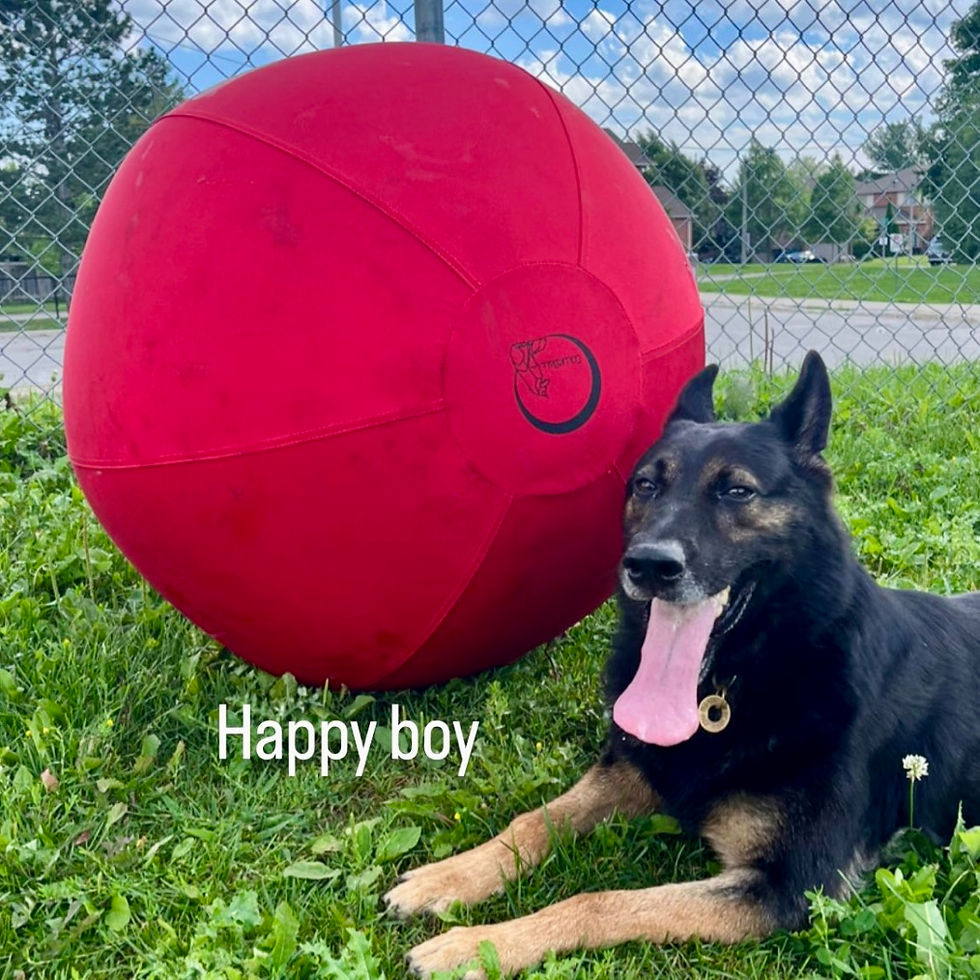
Playing with a herding ball for dogs — which forces your dog to strategize, push, and chase without you needing to throw or fetch

Off-leash movement combined with a herding ball gives high-energy dogs the workout they actually need. 2. Prioritize Mental Stimulation for Dogs
Mental stimulation for dogs is often more exhausting than physical exercise. A 20-minute sniff walk or puzzle session can tire a dog more than an hour of fetch — because it activates the brain, not just the legs.
Top mental stimulation options:
Puzzle feeders and snuffle mats
Nose work and scent games
Learning new commands (especially complex ones)
Playing with a herding ball — herding instinct kicks in, requiring your dog to calculate angles, control the ball, and stay focused for extended sessions
A herding ball for Australian Shepherd breeds specifically channels their intense drive into productive, focused play

3. Establish a Predictable Daily Routine
Dogs are creatures of habit, and hyperactivity often spikes when routines break down. A dog that doesn't know when exercise is coming will be "on" all the time — pacing, barking, jumping — as a way of soliciting engagement.
Build a consistent daily rhythm:
Morning: Structured exercise (herding ball session, walk, or run)
Midday: Mental activity (training, puzzle feeder)
Evening: Calm, low-stimulation time — no roughhousing right before bed
The predictability itself is calming. Once your dog knows what's coming, the frantic bid for attention usually drops off significantly.
4. Train Impulse Control (Not Just Obedience)
A dog who knows "sit" but can't hold it when the doorbell rings doesn't have impulse control — they have a trick. Real impulse control is trained differently.
Exercises that build self-regulation:
"Stay" with distractions — increasing duration and distance while real-world chaos happens around them
"Leave it" practiced with high-value items
Waiting at doors and thresholds before moving forward
"Go to your place" — teaching dogs to self-settle on a mat or bed on cue
These exercises rewire the default response from "charge ahead" to "check in first." Over weeks of practice, you'll notice a calmer, more focused dog across the board.

5. Use a Herding Ball to Channel Instinct (Not Fight It)
This is the single most effective tool for herding dog breeds specifically. Trying to suppress herding instinct is like trying to stop a dog from sniffing — it's not going to work, and the fight will exhaust you both.
A herding ball gives that instinct a legal, productive outlet. Instead of chasing cars, nipping at kids' ankles, or obsessively circling the yard, your dog gets to do what they were literally born to do — herd something.
CollieBall is the original herding ball brand, built tough enough to withstand real herding dogs and sized to trigger true herding behavior. Many owners report that a 15–20 minute CollieBall session produces the same calm they used to only get after a 2-hour off-leash run. If you have an Aussie, check out our dedicated guide: herding ball for Australian Shepherd.
6. Dial Down Stimulation in the Evening
Many owners accidentally overstimulate their dogs right before bed — rough play, excited greetings, high-pitched voices — and then wonder why their dog can't settle. Dogs take cues from you.
In the 60–90 minutes before you want your dog to wind down:
Lower your own energy and voice
Avoid fetch or tug games
Offer a chew, lick mat, or stuffed Kong instead
Practice "settle" on a mat with calm praise only
This decompression window trains your dog's nervous system to shift gears — and over time, that transition becomes faster and easier.

The Common Thread: Meeting the Dog You Actually Have
Every technique above points to the same principle: hyperactivity isn't something to suppress — it's a signal. Your dog is telling you they have more to give than their current life is asking of them.
When you meet your dog at their level — with the right exercise, the right mental challenges, and an outlet that matches their instincts — the hyperactivity doesn't have to be managed. It just... goes away.
For herding dog breeds, that outlet is a herding ball for dogs. It's not a magic fix — but it's the closest thing to it for dogs built to work.
CollieBall is the original herding ball, trusted by owners of Border Collies, Australian Shepherds, Cattle Dogs, and every other high-drive breed who's tired of a dog that won't quit.
Find the right size in the CollieBall shop.


Comments