What Does a Herding Ball Do? Benefits for Active Dogs
- Seven
- Feb 3
- 4 min read

If you own a high-energy breed like a Border Collie or an Australian Shepherd, you’ve likely seen them try to "herd" everything from your heels to moving shadows. This is where a herding ball comes into play. But what exactly does it do, and why is it becoming a staple in border collie training?
Understanding the Purpose of a Herding Ball
At its core, a herding ball for dogs is designed to simulate the movement of livestock. For a herding dog, the instinct to push, chase, and direct movement is hardwired into their DNA. Since most pets don't have a flock of sheep in the backyard, these large, durable balls provide a constructive outlet for those natural drives.
1. Physical Exercise and Energy Release
A herding ball encourages "pushing" play rather than traditional fetching. Because the dog cannot easily pick the ball up with their mouth, they must use their nose, chest, and paws to move it. This provides a full-body workout that tires out even the most athletic Herding Dog Breeds.
Unlike a standard tennis ball, which focuses on jaw strength and sprinting, a herding ball engages the dog's core, neck, and hindquarters. 15 minutes of intense "push play" is often equivalent to an hour-long walk because of the high intensity and constant directional changes involved.
2. Mental Stimulation and Focus

Herding dog training isn't just about running; it’s about problem-solving. Predicting which way the ball will roll requires focus and agility. This mental engagement is why Herding balls are considered essential toys for Border Collie owners. It forces the dog to "work," which significantly reduces anxiety and destructive behaviors caused by boredom.
Solving the "Hard Plastic" Problem
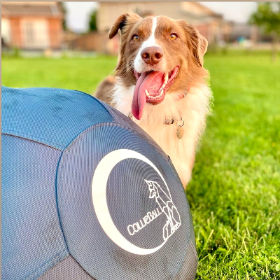
Many owners search for an Aussie dog ball only to find hard plastic options that are loud, heavy, and can cause "balding" or abrasions on a dog's nose. The CollieBall approach uses a high-tensile fabric cover. This makes the herding ball:
Quieter: No more loud plastic banging against fences or walls.
Safer: The fabric prevents the "nose-burn" common with raw plastic surfaces.
Grippable: While they can't pop the inner ball, the fabric gives them a sense of control and tactile satisfaction.
How to Introduce Your Dog to a Herding Ball
You shouldn't just throw a herding ball for dogs into the yard and expect them to know what to do. Some dogs may be intimidated by the size, while others might try to bite it aggressively. Follow these steps for successful herding dog training:
The "Scent" Phase: Let the dog sniff the ball while it's stationary. Reward them for calm curiosity.
The "Nudge" Reward: Gently roll the ball toward them. When they nudge it back with their nose or chest, use a clicker or a treat to reinforce the behavior.
Encourage the Push: Once they understand that moving the ball is the goal, start moving it further away. Encourage them to "bring it" or "push it" back to you.
Set Boundaries: If the dog gets too "mouthy" or tries to bite the ball, pause the play. This teaches them that pushing is the only way the game continues.
Is It Only for Large Dogs?
Absolutely not! While these balls are famous for calming the intense Australian shepherd temperament, smaller breeds love them too. Even a corgi—a surprisingly powerful little Corgi Dog—can benefit from the "low-to-the-ground" pushing action that a smaller version of the ball provides. Because Corgis are historically cattle drivers, the mechanics of a herding ball perfectly match their physical build.
Versatility: From Canines to Equines
Interestingly, the concept of "push play" isn't limited to dogs. The durability required for herding gear is quite similar to what is needed for larger animals. Many people search for a high-quality horse ball to keep their equines entertained in the pasture. A horse using its chest to drive a ball is the ultimate form of enrichment, preventing stall vices and promoting movement in turnout areas.
Safety Tips for Herding Ball Play

To ensure your Australian Shepherd or Border Collie stays safe, keep these tips in mind:
Surface Matters: Play on grass or sand. Concrete can act like sandpaper on a dog's paws and the ball cover during high-speed chases.
Supervision is Key: Never leave your dog unattended with a herding ball. While they are built for durability, no toy is truly indestructible.
Check the Fit: Ensure the ball is large enough that the dog cannot get their jaws around it. The goal is to push, not to carry.
Conclusion: Why Every Active Dog Needs One
What does a herding ball do? It provides a purpose. For breeds designed to work, a life of just "sitting and staying" isn't enough. Whether you are dealing with a high-drive herding dog or a playful Corgi Dog, a herding ball for dogs bridge the gap between their ancient instincts and their modern lives as our best friends.
Invest in a quality herding ball today and watch your dog transform from a restless pup into a focused, happy "pro-herder."

Comments